White Borders
2026 | Cuchifritos Gallery + Project Space | New York, NY
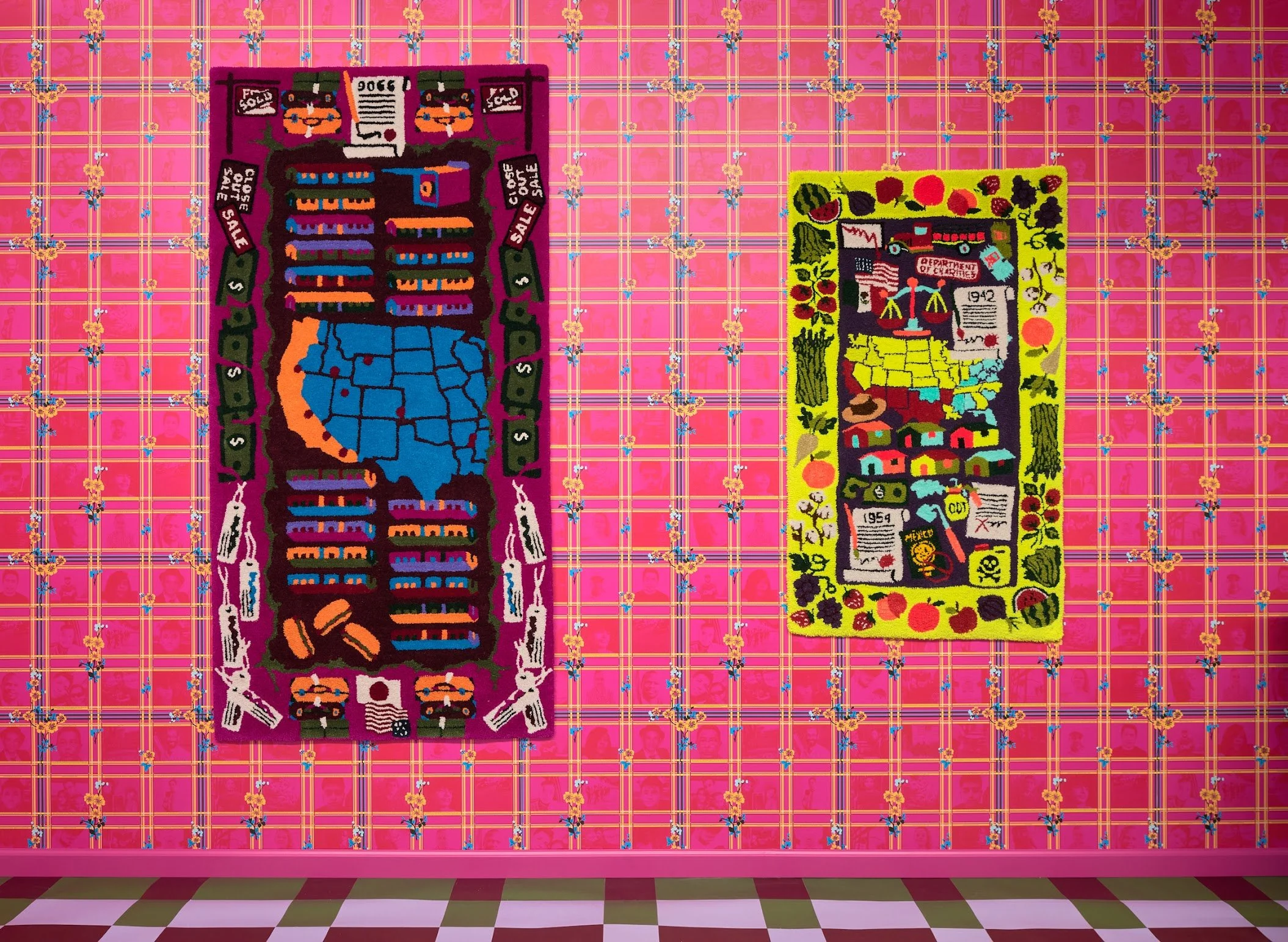
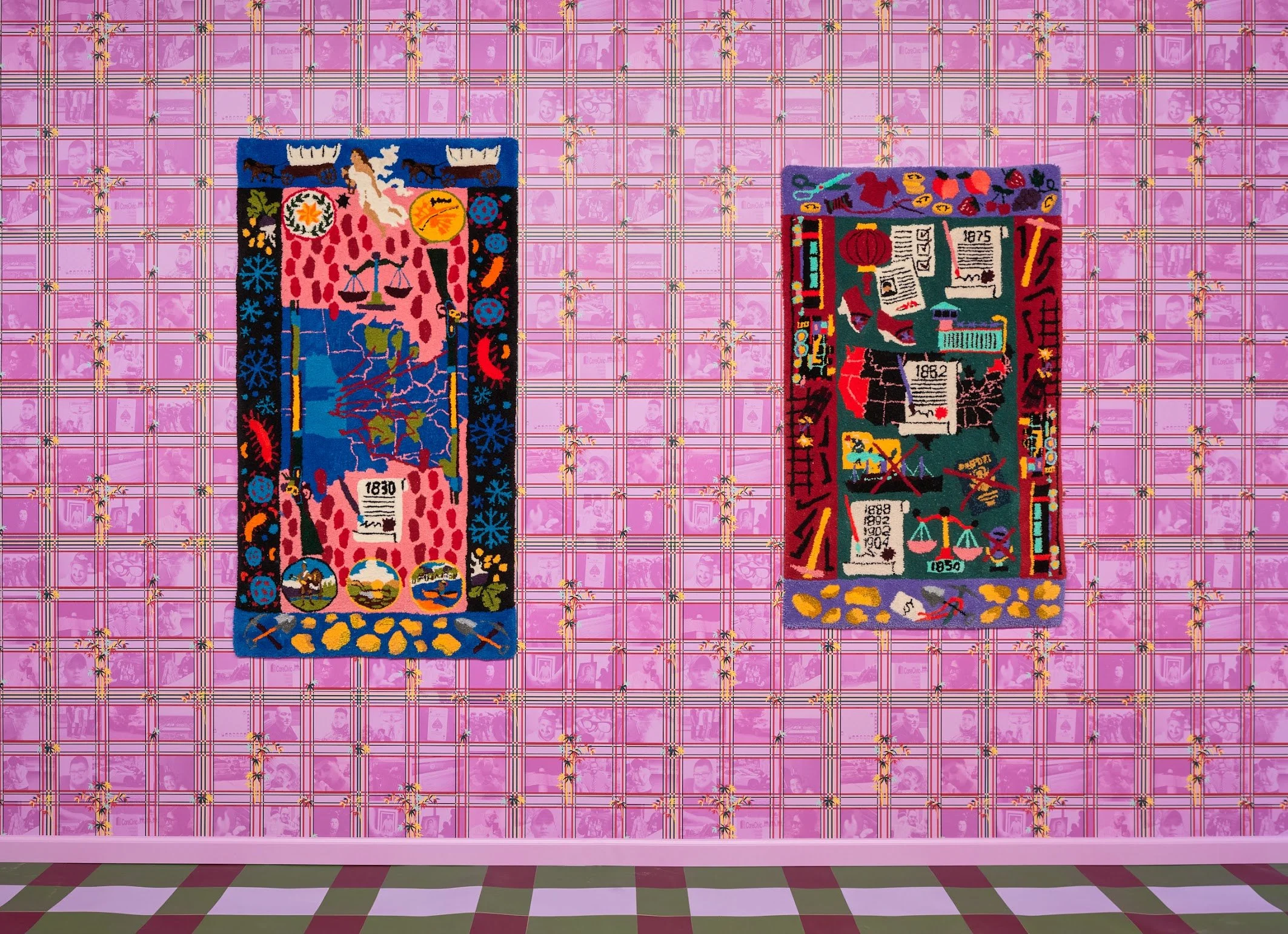
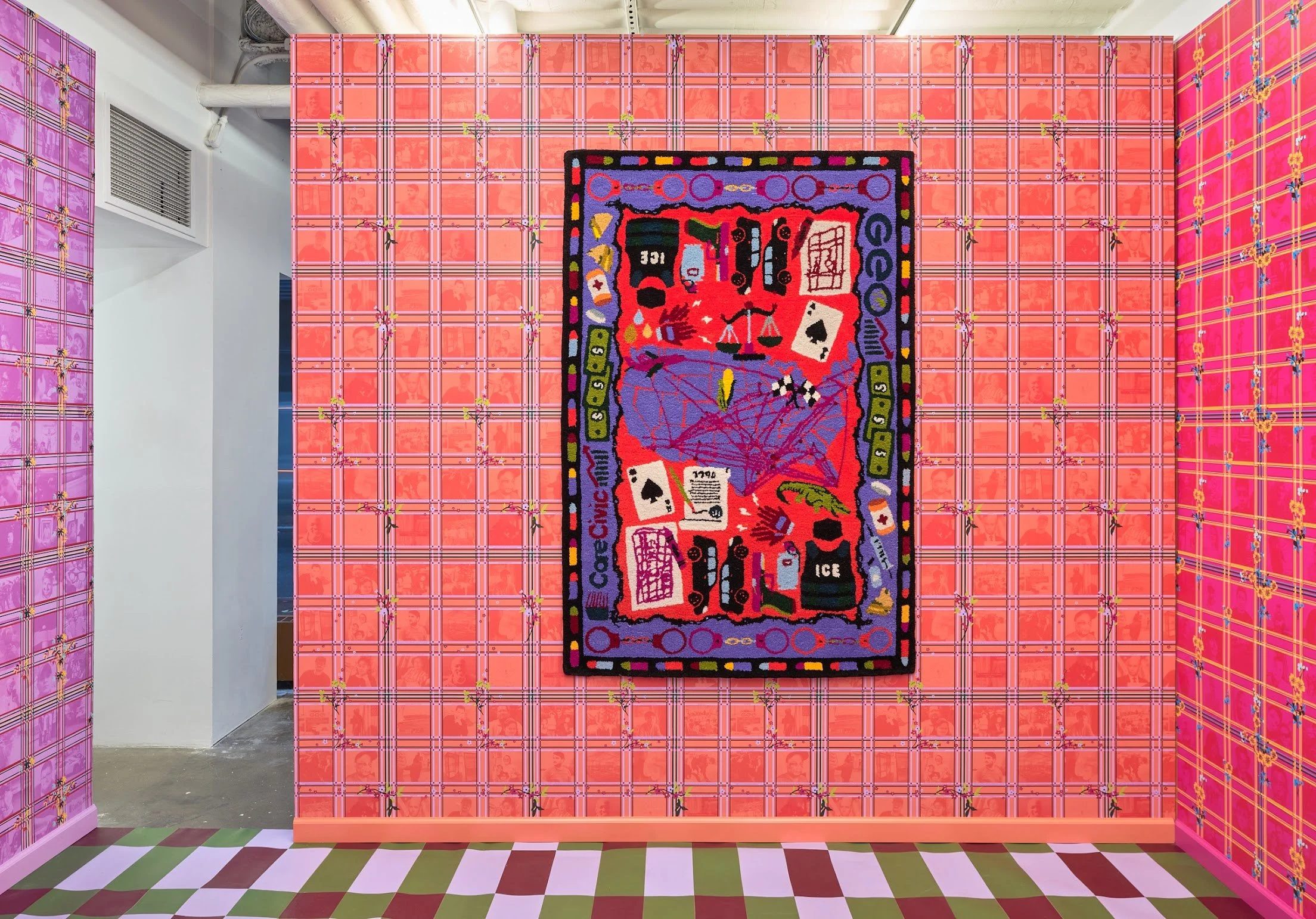
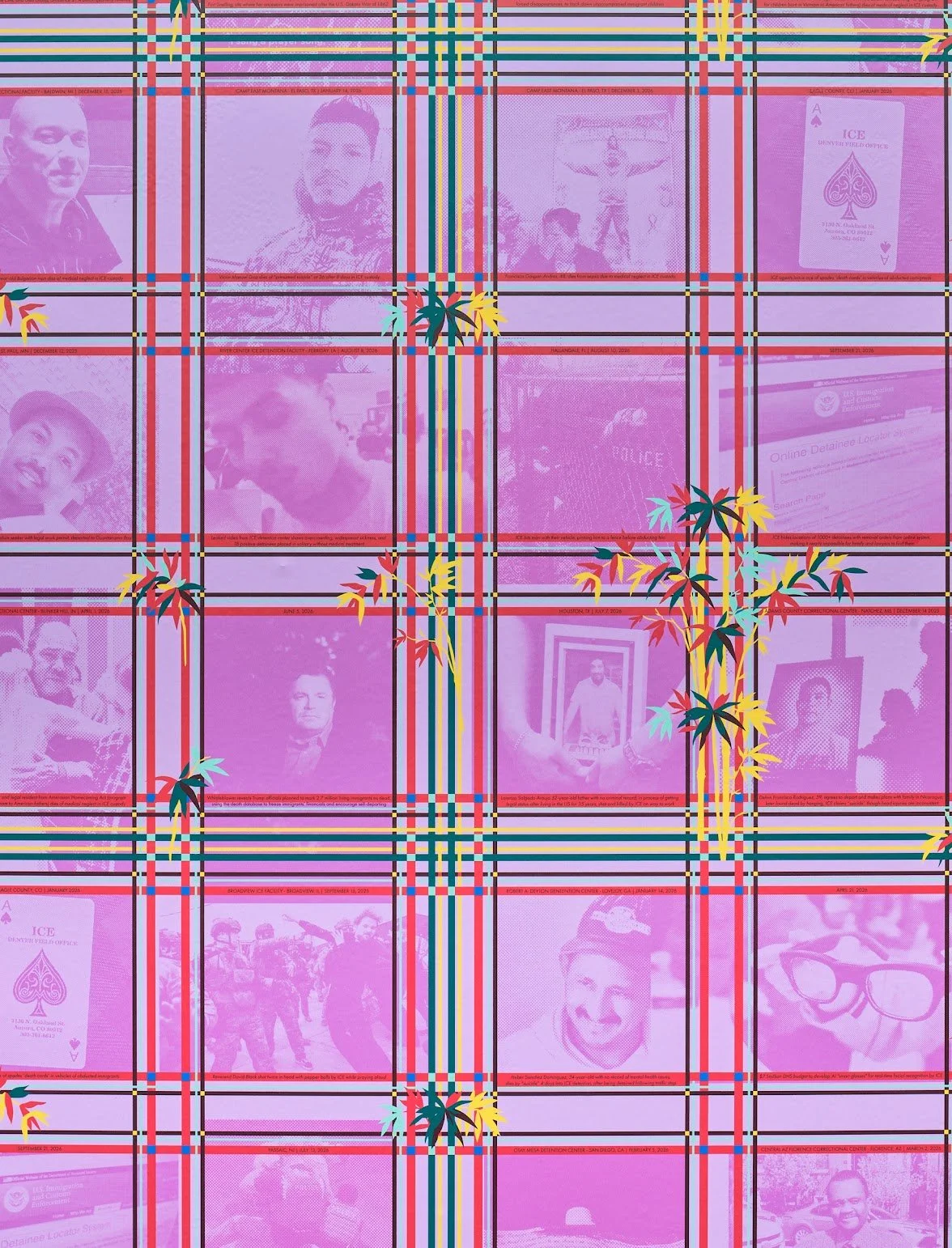
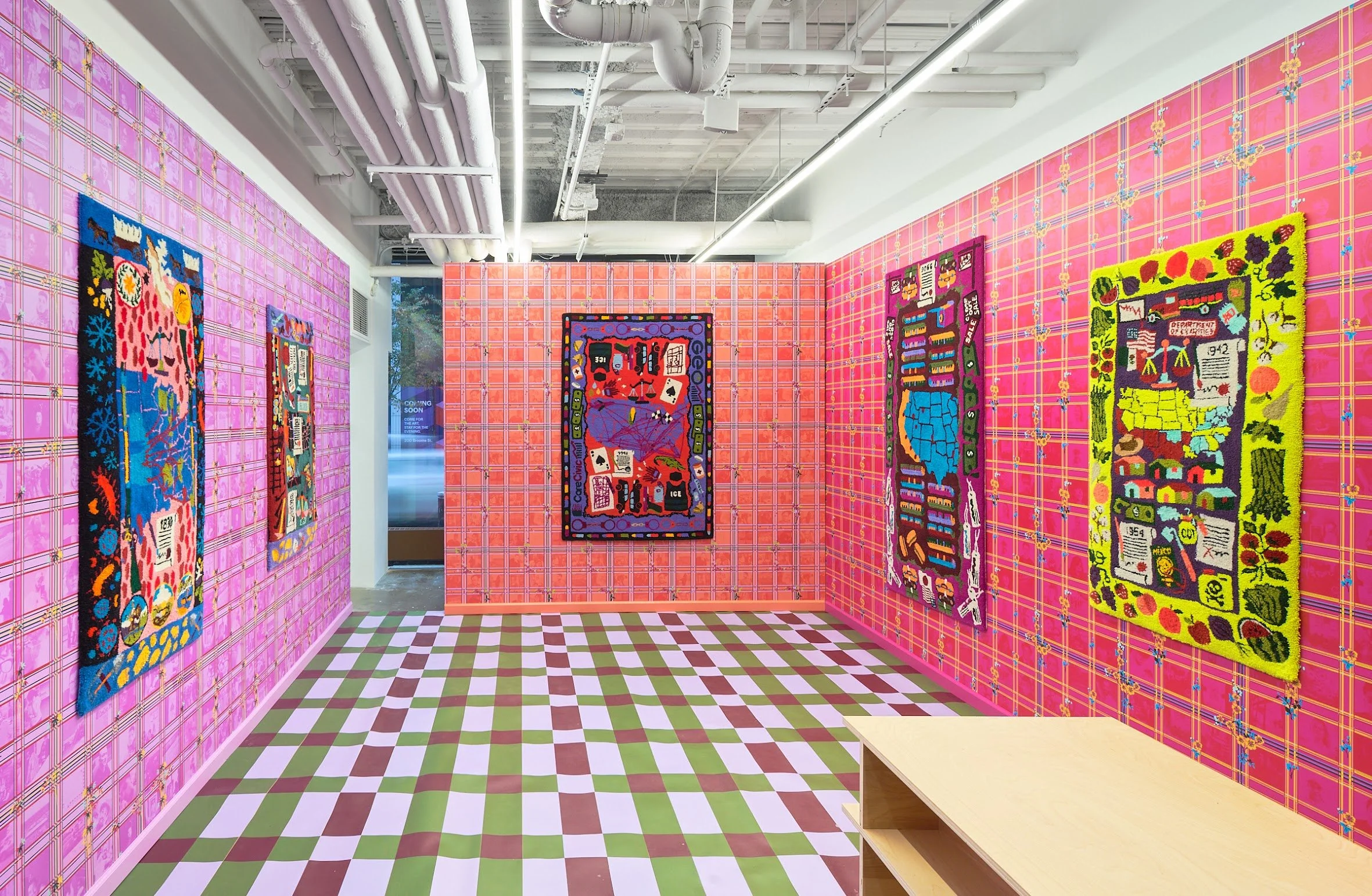
White Borders builds off of my ongoing series American War Rugs, hand-tufted carpets that borrow the visual and material language of Afghan war rugs to critique U.S. state violence at home and abroad. Here, the rugs trace a broad history of American immigration policy, examining who is permitted to become a citizen, who can enter the country, and who can move freely within its borders. The works reference the Trail of Tears, the Chinese Exclusion Acts, Japanese American incarceration, Mexican Repatriation, Operation Wetback, and ICE crackdowns under the second Trump administration. The rugs are paired with wallpapers that initially read as benign decorative patterns but, on closer inspection, reveal an archive of ICE violence gathered over two years from my Instagram feed.
The exhibition takes its name from Reece Jones’s 2021 book, White Borders: The History of Race and Immigration in the United States from Chinese Exclusion to the Border Wall. Like Jones, I am aiming to challenge the mythology of the American melting pot, tracing the ways in which U.S. immigration policy has historically reinforced racial hierarchies and protected the privileges of whiteness.
For me, a third-generation immigrant descended from families in Slovakia and Italy, the narrative of the melting pot loomed large. I grew up with stories of my family’s journey through Ellis Island and their transition from railroad laborers with limited formal education to the college-educated middle class. Conversations about “whiteness” were largely absent from these accounts. However what persisted instead was a tenacious belief that any immigrant could achieve the American Dream. Yet U.S. history tells another story. The nation’s first naturalization law, passed in 1790, restricted citizenship to “free white persons.” An 1870 amendment extended eligibility to people of African descent, while Indigenous Americans and other populations remained excluded from naturalization. Although the Fourteenth Amendment established birthright citizenship in 1868, citizenship was not extended to all Indigenous Americans born in the United States until the Indian Citizenship Act of 1924.
White Borders invites visitors to reconsider the relationships between personal comfort, national belonging, and systemic violence. Through the use of soft materials, decorative excess, and recognizable motifs I am to create an unexpected point of entry into difficult histories, asking what becomes visible when the spaces and objects associated with safety are understood in relation to the systems that make them possible.